
cold water. deep lakes.
endless power.
Lake Trout: A true northern original
Salvelinus namaycush
Lake trout are one of the true originals of the North. Despite the name, they are not technically trout at all, but members of the char family, closely related to arctic char and brook trout. What they share with trout is endurance, power, and an almost legendary reputation among anglers.
At Scott Lake Lodge, lake trout are part of the ecosystem itself. They are deep-water predators shaped by cold, oxygen-rich lakes, long winters, and minimal fishing pressure. These are not delicate fish. They are built for depth, speed, and stamina.
Fishing Features:
Lake trout are widely regarded as one of the hardest-fighting freshwater fish in the world. Their deeply forked tail gives them tremendous speed, while their strength comes in bursts, followed by long, grinding power.
Key characteristics:
- Powerful, deep-running fights
- Exceptional stamina
- Built for speed and depth rather than surface action
These traits favor anglers who are comfortable fishing methodically and trusting the process, rather than chasing constant surface activity.
Behavior:
Lake trout are opportunistic predators. Smaller fish feed on plankton, invertebrates, and insects, while larger trout become aggressive hunters, targeting substantial prey such as whitefish, lake cisco, burbot, and even other lake trout.
Big lake trout are not subtle feeders. Their size, appetite, and dominance place them at the top of the food chain. Understanding their role in the ecosystem is key to understanding how and where they feed.
In practice, lake trout reward anglers who think in terms of systems, not just strikes.

Habitat:
Lake trout thrive in large, deep lakes with cold, well-oxygenated water. They prefer temperatures around 50°F, which places them deep during summer months and allows them to roam the entire water column during cooler periods.
These conditions are rare and increasingly fragile. Pristine northern waters like those at Scott Lake are essential to their survival and longevity.
This is where fly-out access matters: intact lakes, minimal pressure, and habitat that allows lake trout to reach their full potential.

Seasonal Movements:
Lake trout shift their behavior dramatically with the seasons. Rather than migrating long distances, they move vertically through the water column as conditions change.
Early Season: After ice-out, trout move freely through shallow and mid-depth water.
Mid-Summer: Fish hold deep, often between 50 and 150 feet.
Fall: Trout move onto shallow rocky reefs to spawn, creating one of the most exciting fishing periods of the year.
Lake trout don’t leave the lake. They change where they live within it.
The Northern Advantage
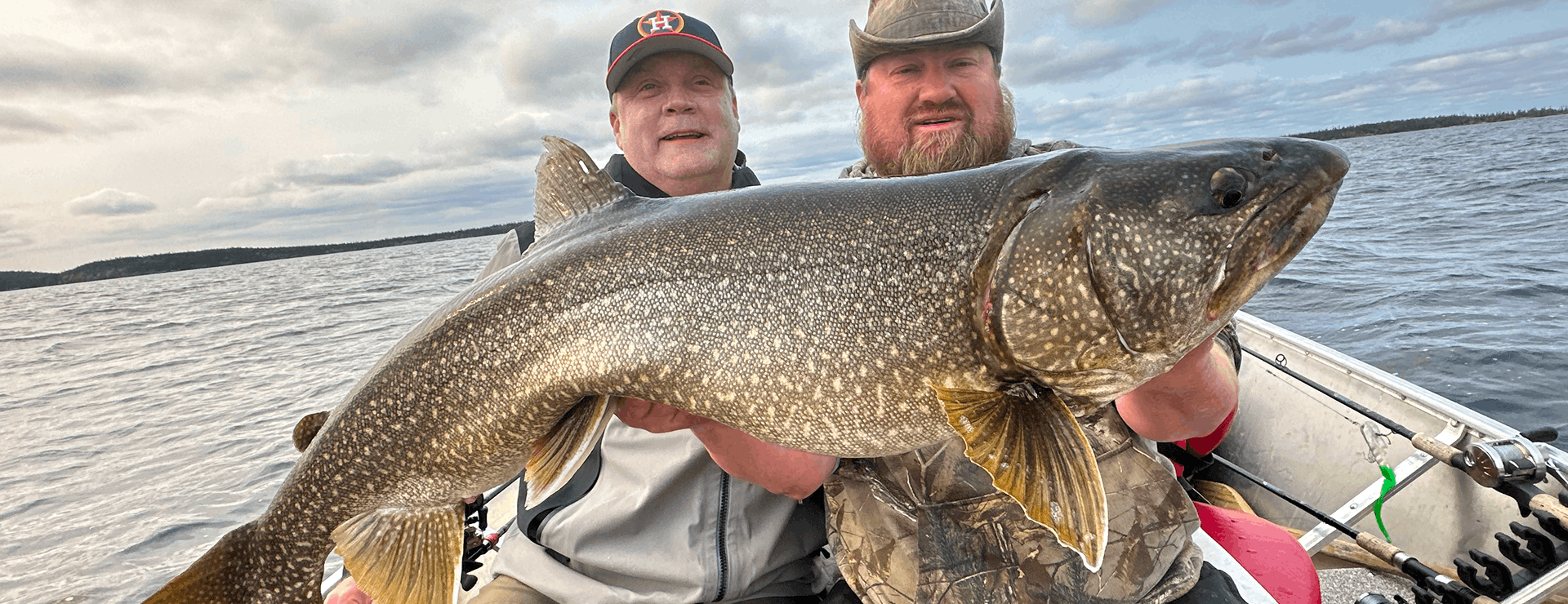
Lake trout in the far north grow slowly, but they live long lives. Cold water, short growing seasons, and low fishing pressure allow populations to remain healthy and stable.
These northern conditions produce fish that may take decades to reach maturity, but reward anglers with exceptional size, condition, and longevity. This is not fast fishing, but it is honest fishing, shaped by time and place.
What this means for anglers:
- Consistent populations
- Healthy, well-conditioned fish
- A true wilderness fishery
Who Lake Trout Are For:
This experience is a strong match if you:
- Enjoy deliberate, methodical fishing
- Appreciate powerful, sustained fights
- Are interested in big water and deep structure
- Value wilderness and solitude over numbers
Best Time for Lake Trout:
Early season and fall offer the most dynamic fishing opportunities, when trout move into more accessible water and feeding activity increases.
For many anglers, catching their first truly large lake trout becomes a defining fishing memory.
Plan Your Lake Trout Experience
Whether you come with a clear focus or prefer to explore all three species, our team will help shape your time on the water into something unforgettable.