
Where the Wild Still Leads
Not a Zoo. Not a Park.
The Real North.
Most wildlife today survives at the edge of roads, towns, and routine. Here, it moves differently. There are no feeding schedules. No viewing platforms. No guarantees.
Only distance. Habitat. And time.
At Scott Lake, wildlife is not an attraction. It is part of what shapes this place.
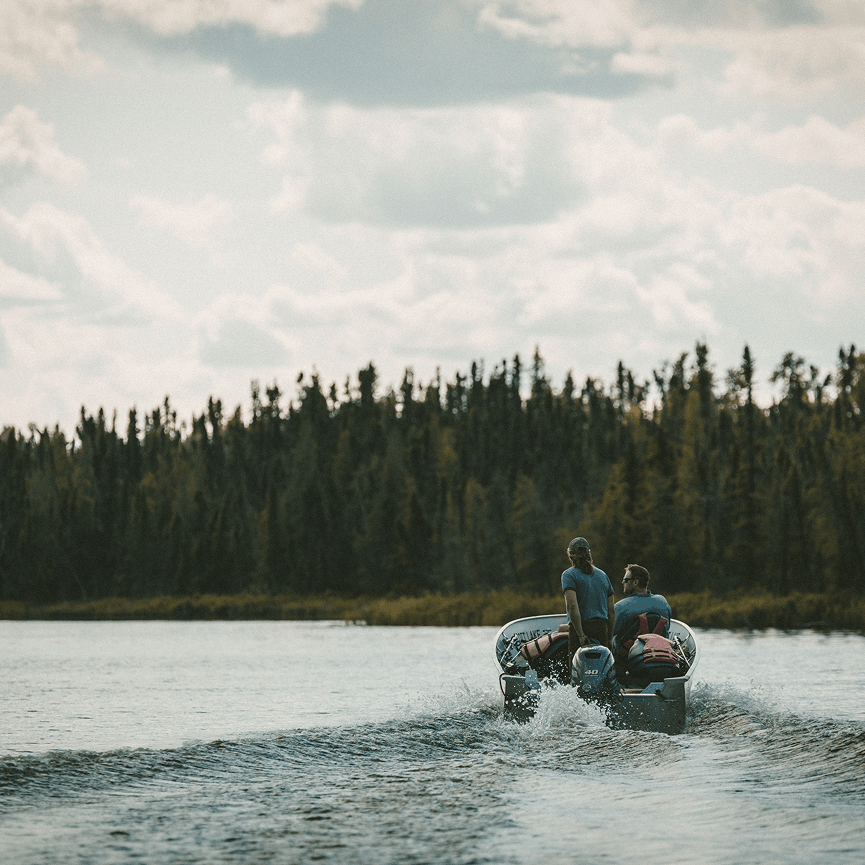
THIS IS WHAT THE WORLD LOOKED LIKE BEFORE WE SHAPED IT
You are not entering a managed landscape. You are stepping briefly into an ongoing story that has never needed people to continue.
Before roads. Before noise. Before movement followed a schedule. Here, the system is still intact. Predator and prey. Migration and season. Silence and distance.
You’re not stepping into a curated environment. You’re stepping into something that continues, whether you’re here or not.
What You May Encounter
Few people today experience a place where animals outnumber humans.
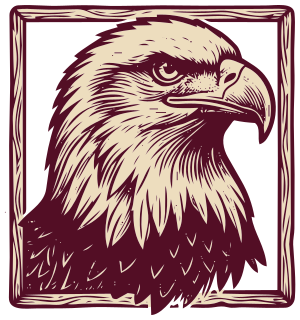
Eagles
Silent watchers
At first it might be only a shape slipping between rocks or along a shoreline. Lean. Focused. A wolf moves with an economy of motion that feels almost invisible, each step measured, silent, aware.
Their eyes track everything. Ears flick at distant sounds. Even at rest, there is alertness, as though the landscape is speaking and they understand every word. Wolves travel in tight social groups, families bound by cooperation and hierarchy, their survival depending on unity.
Hearing a howl carry across the wilderness is a moment that lands deep. It is communication, location, connection. A voice that travels miles through air that has no walls to stop it. When wolves are near, you feel part of something older than human presence.
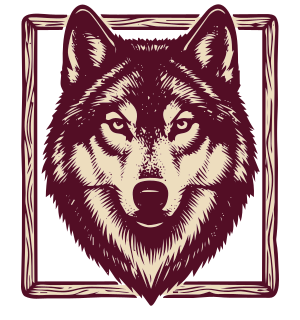
Wolves
Heard more than seen
At first it might be only a shape slipping between rocks or along a shoreline. Lean. Focused. A wolf moves with an economy of motion that feels almost invisible, each step measured, silent, aware.
Their eyes track everything. Ears flick at distant sounds. Even at rest, there is alertness, as though the landscape is speaking and they understand every word. Wolves travel in tight social groups, families bound by cooperation and hierarchy, their survival depending on unity.
Hearing a howl carry across the wilderness is a moment that lands deep. It is communication, location, connection. A voice that travels miles through air that has no walls to stop it. When wolves are near, you feel part of something older than human presence.
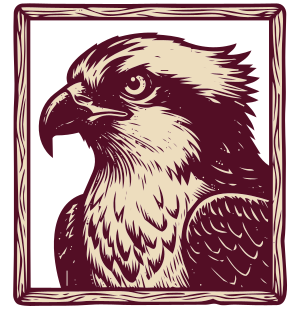
Osprey
Masters of the dive
If eagles rule the sky, osprey are specialists of the water. You spot them by the hover, wings beating in place as their eyes lock onto movement below the surface. Then the plunge, feet first, a splash, and they rise again with a fish twisting in their grip.
Unlike most raptors, osprey are almost entirely fish hunters. Their outer toes can rotate backward, giving them a two-front, two-back grip that locks prey in place mid-flight. Water shakes from their feathers as they climb, adjusting the fish headfirst for aerodynamics before heading to a nest perched on a lone tree or man-made platform. Their hunting is pure efficiency, a rhythm of air, pause, dive, rise.
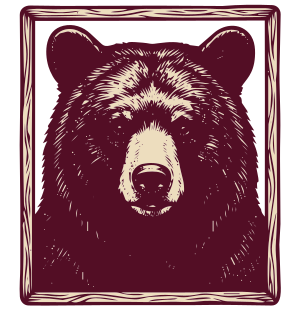
BLACK BEAR
Quiet strength
A dark figure shifts among willows or along a shoreline, nose working the air long before you notice it. Black bears move with surprising softness for their size, strong but unhurried, driven by curiosity and an endless search for food.
Their lives revolve around seasons. Berries, roots, fish, insects, anything that fuels the long cycle of feeding and storing energy. Despite their power, most encounters reveal caution rather than aggression. A bear pauses, stands, scents the wind, then melts back into cover with barely a sound.
They are both gentle and formidable, a reminder that strength in the wild is often quiet until it needs not to be.
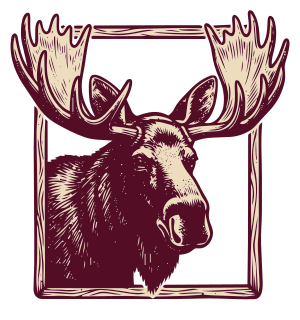
Moose
Playful and quick
At a distance it can look like a fallen tree that suddenly stands up. Moose are immense, all legs and muscle, built for water, marsh, and forest edge. When they move through shallows, water folds around them as if parting for something that belongs there.
A bull’s antlers can span wider than a doorway, flat and heavy like open hands of bone. Cows, though antlerless, carry the same towering presence. Despite their size, they feed delicately, stripping leaves, pulling aquatic plants from below the surface.
Seeing a moose in the wild shifts your sense of scale. The landscape feels bigger because something this large lives comfortably within it.
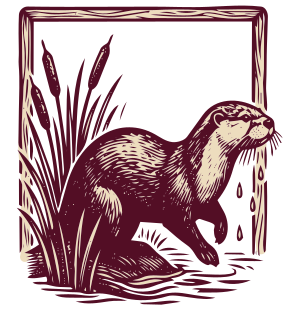
Otter
Playful and quick
Energy on the shoreline. Otters move like water given fur, sliding, diving, tumbling over each other in bursts of play that seem too joyful to be survival. But it is survival. Practice, bonding, skill.
They fish with speed and coordination, vanishing into dark water and resurfacing with quick bites. On land they roll and slide, leaving winding tracks that tell stories of motion and curiosity.
Their presence changes the mood of a place. Where otters are, the wilderness feels lively, animated, almost laughing.
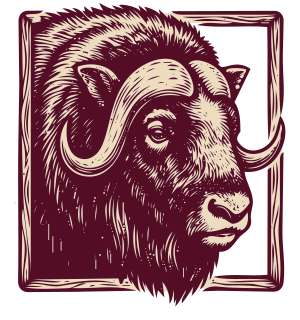
musk ox
Survivors of the tundra
Across open tundra, they appear like dark stones scattered across the land until one lifts its head. Musk ox carry the weight of another era. Long guard hairs sway in the wind, nearly brushing the ground, while beneath lies a dense underlayer that shields them from extreme cold.
Their social defense is unforgettable. When danger approaches, adults form a tight ring, horns outward, calves shielded in the center. It is a strategy older than most predators they face.
They do not feel temporary. Watching them graze in silence feels like witnessing a piece of the Ice Age that never left.
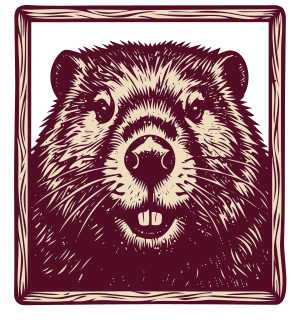
beaver
Engineers of the lake
Still water often gives them away. A sudden V-shaped ripple. The quiet glide of a broad, flat tail steering through the surface. Beavers are architects of the wilderness, shaping wetlands with patience and instinct.
You might first notice their work, chewed tree trunks sharpened to points, branches woven into dams that slow water into ponds full of life. When startled, a sharp tail slap cracks across the water, a warning signal that echoes through the shoreline.
Most active in low light, they move with focus, hauling branches larger than themselves. Entire ecosystems grow from their engineering.
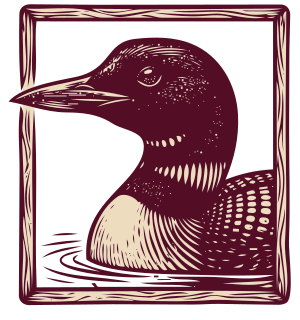
Loons
Voices of the lake
A call breaks across the water, rising and falling in a sound that feels older than language. Then a black-headed bird glides into view, red eyes bright, body low on the surface like something carved from shadow.
Loons are built for water, dense bones helping them dive deep with barely a ripple. One moment they float peacefully, the next they vanish, reappearing far away as if the lake itself moved them.
Their voices carry for miles, echoing over evening water, turning stillness into something alive. When a loon calls, the wilderness answers with silence.
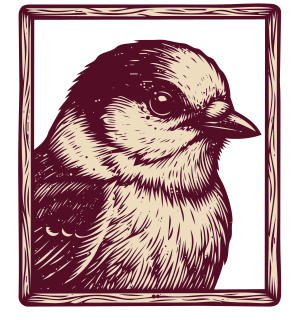
NORTHERN BIRD LIFE
Life between forest and water
Sometimes the wilderness speaks in calls rather than shapes. A loon’s echo over still water. The tapping of a woodpecker hidden in trees. The sudden lift of wings from the reeds.
Shorelines, marshes, forests, and open sky all host different travelers. Migratory songbirds pass through in waves. Waterfowl rest in quiet bays. Ravens cross the sky in pairs, their voices deep and conversational.
Birdlife here is not background. It is the soundtrack, the movement in the periphery, the constant sign that the landscape is alive at every level.
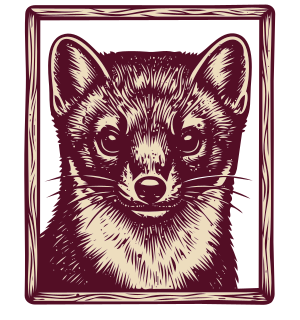
marten
Shadows in the trees
A flicker of brown along a fallen log, gone before your eyes confirm it. Martens are forest acrobats, light-footed hunters that move through branches and snow with equal ease.
Sharp-faced and alert, they investigate everything. Their diet shifts with opportunity, small mammals, birds, berries, insects. In winter they travel over deep snow where heavier predators struggle, turning harsh conditions into advantage.
A sighting feels like catching the forest in motion, quick, curious, and gone again.
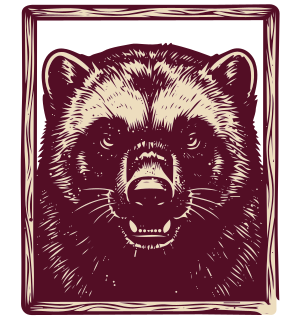
wolverine
Myth and muscle
Rare and restless, a wolverine sighting feels almost unreal. Compact, low to the ground, with the strength of an animal twice its size, it moves with relentless purpose, nose down, covering ground with tireless determination.
Wolverines are built for endurance and survival. They roam enormous territories, climbing, digging, scavenging, hunting when opportunity appears. Their reputation is outsized because their resilience is. Few animals combine such independence, intelligence, and raw persistence. To see one is to witness the wild at its most self-sufficient, a creature that needs little and yields nothing easily.
Scott Lake is wildlife as it was meant to be seen
There are few places left where wildlife exists without boundaries, schedules, or spectacle. At Scott Lake, encounters unfold naturally, shaped by silence, distance, and respect for the land.
To be here is to witness a world that still moves on its own terms, unfiltered, untamed, and increasingly rare.